



Buying shop fitting for garden centres
Buying shop fitting for garden centres
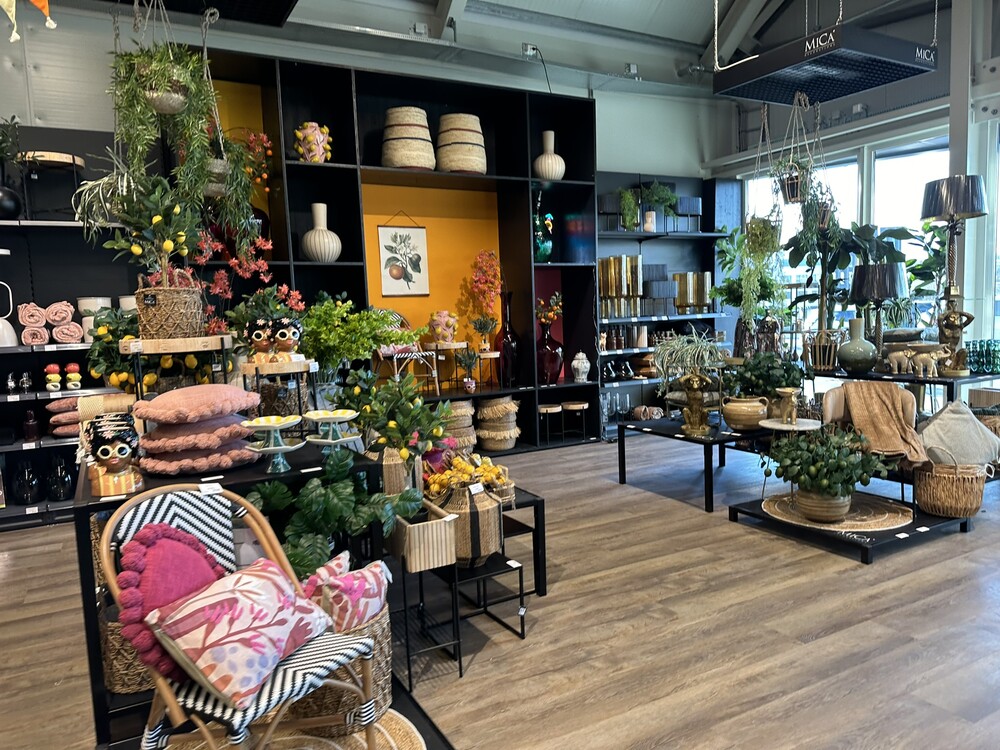
Shop fitting is the skeleton of your store. It determines how quickly you switch between seasons, how professional your products look, and how much margin you keep. We advise garden centres and retailers on the purchase: which materials, which supplier, which price — and where the pitfalls sit.
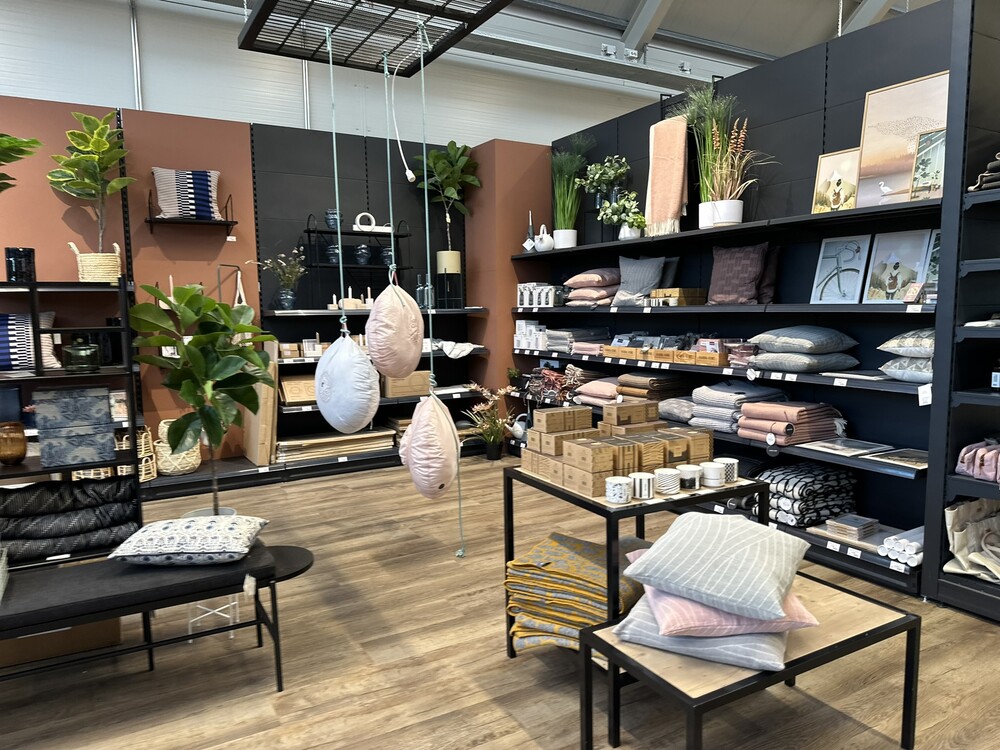
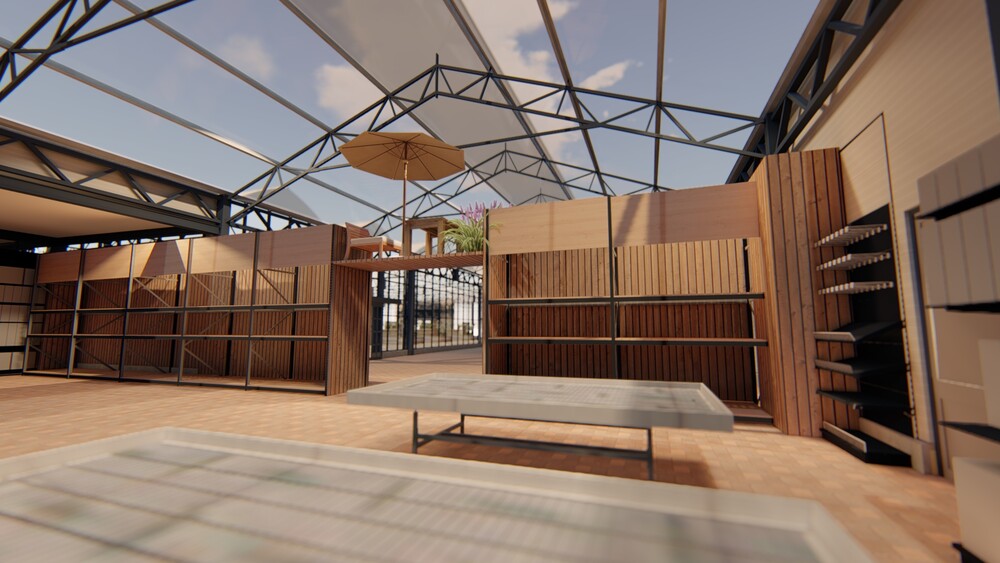
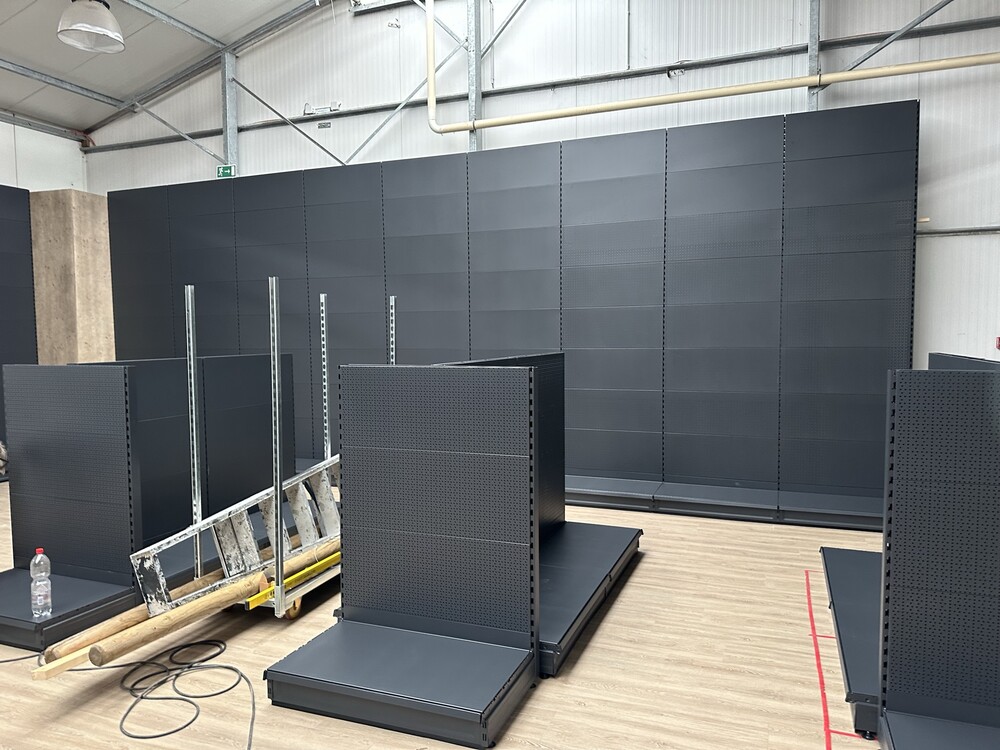
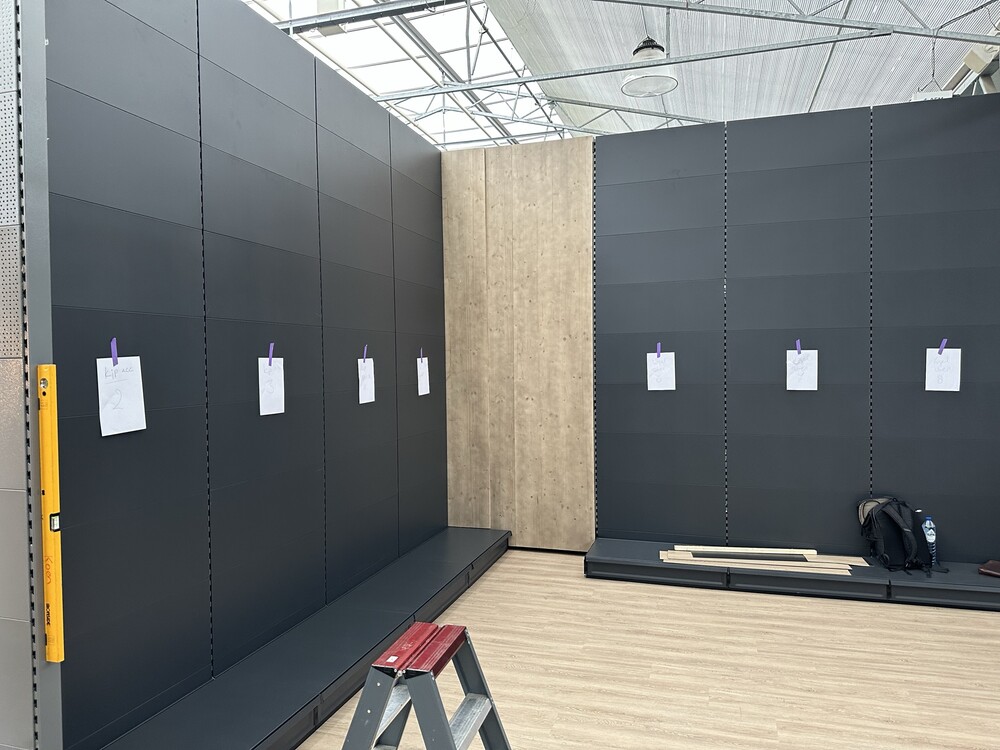
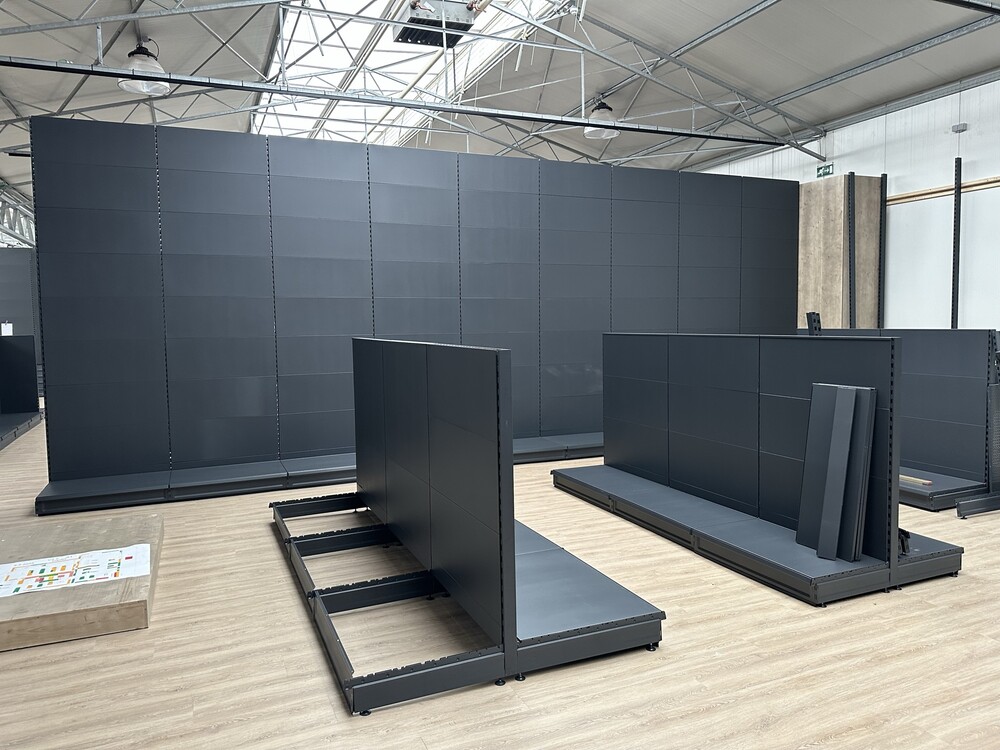
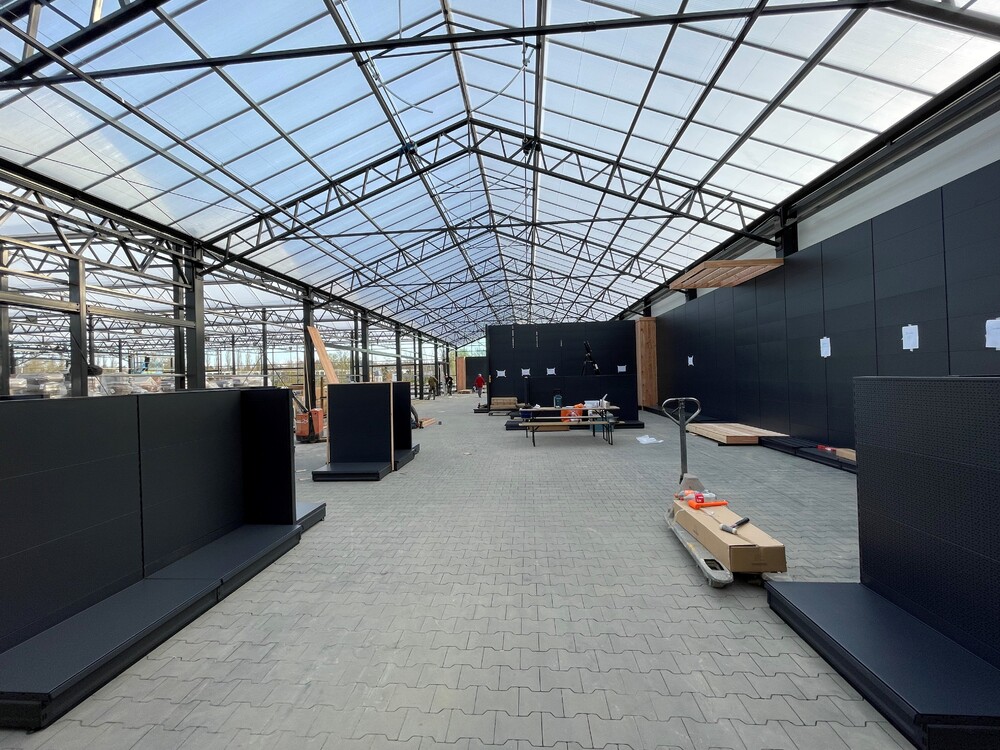
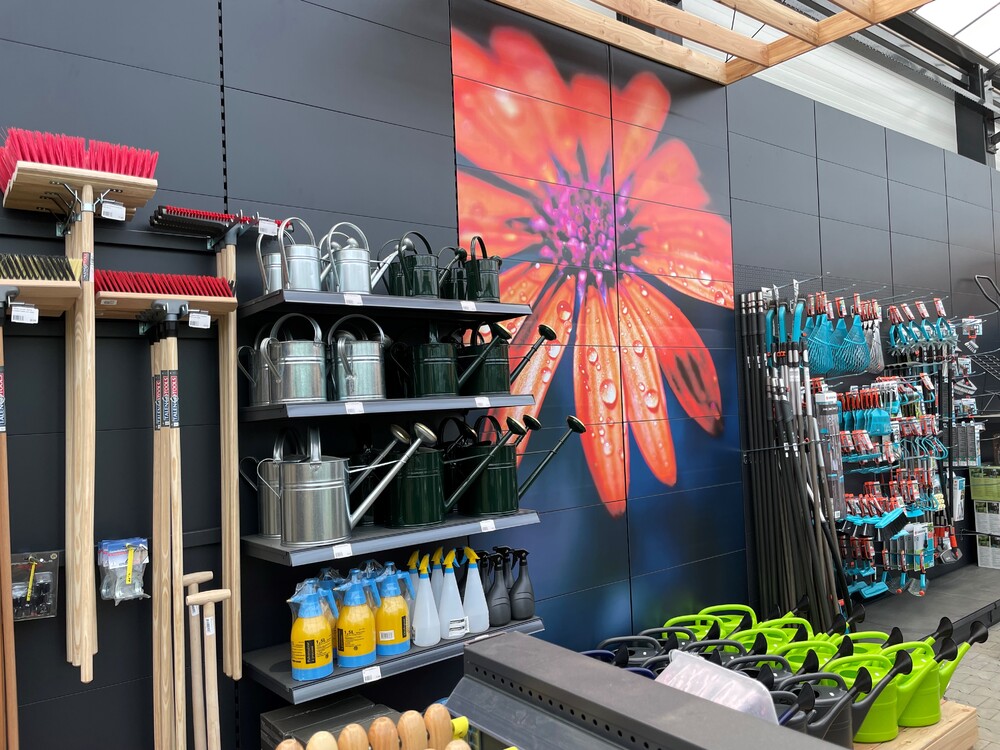
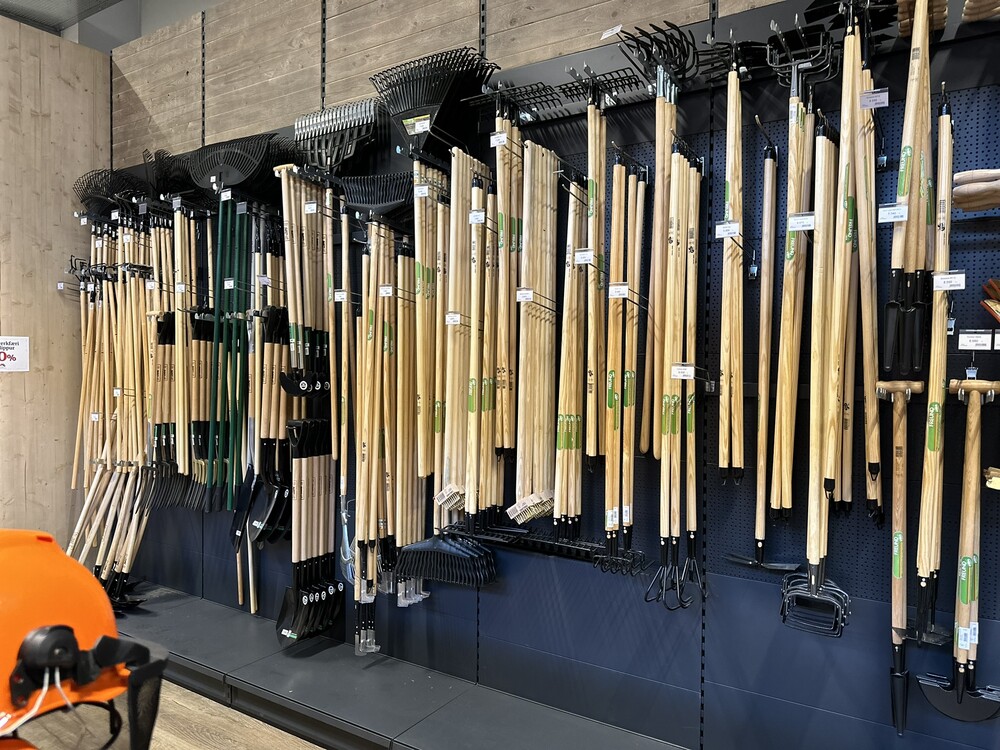
Wall shelving (tegometal)
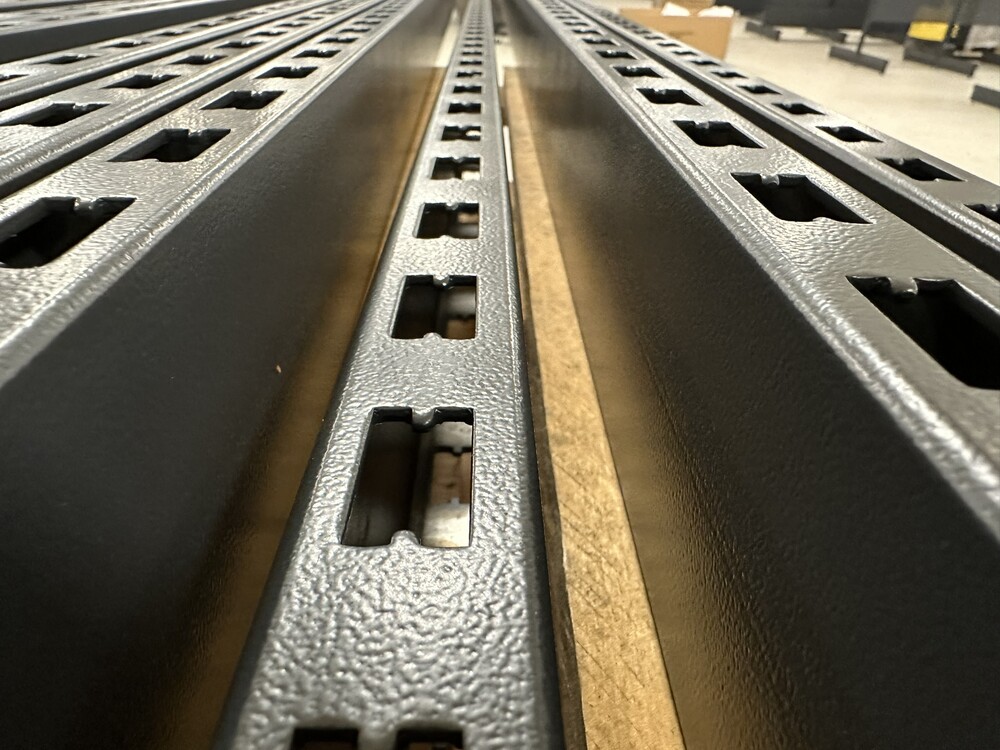
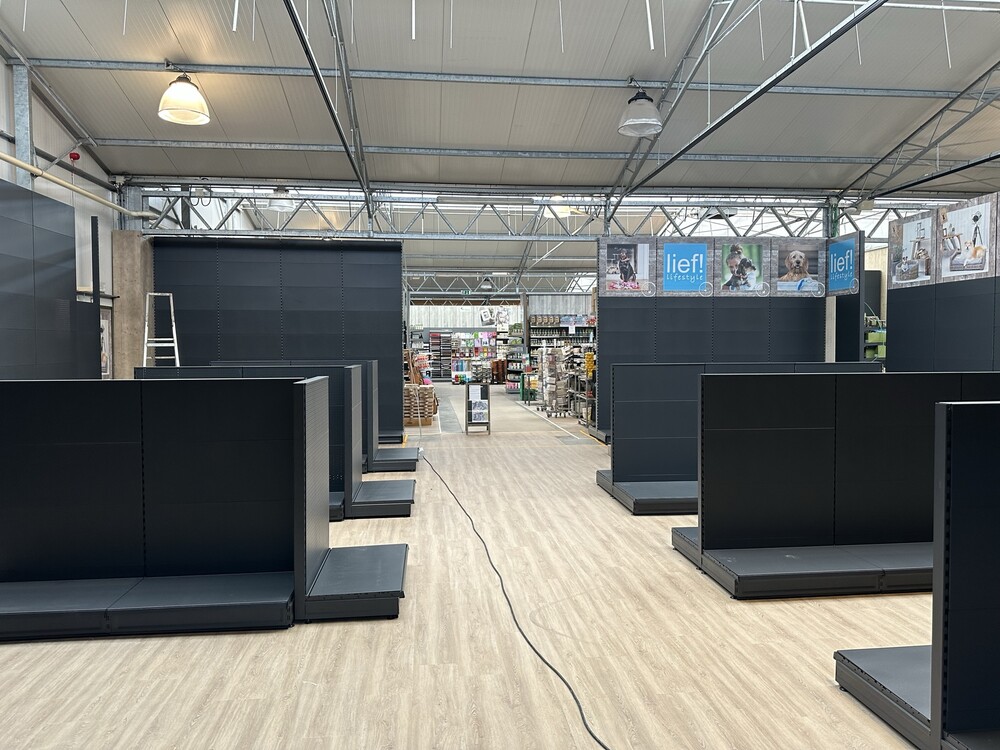
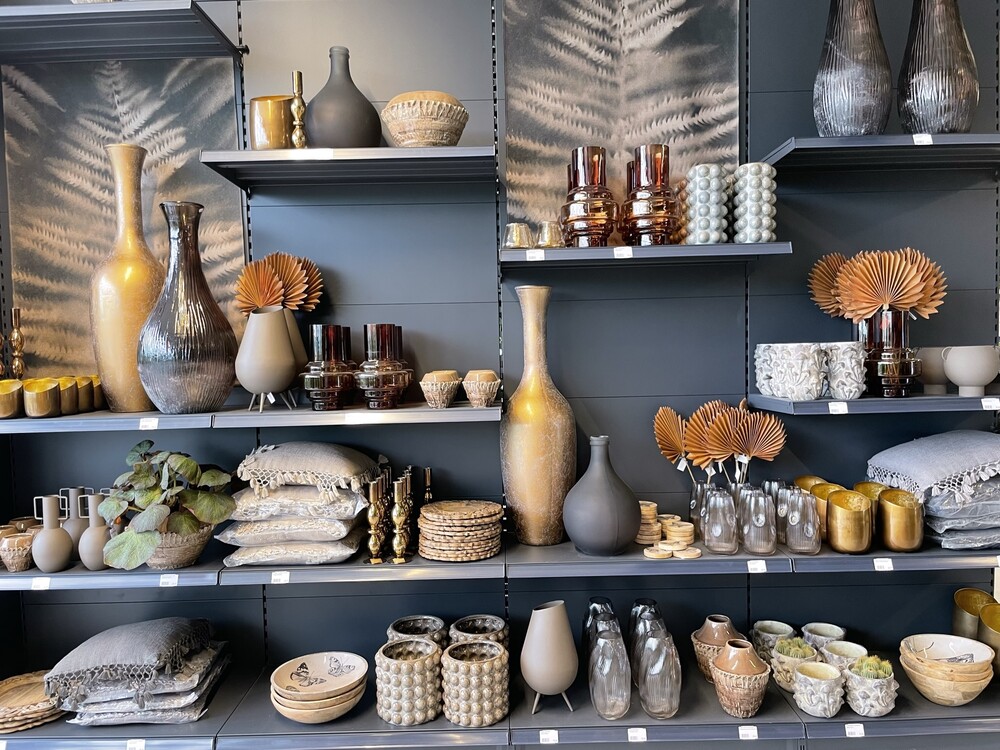
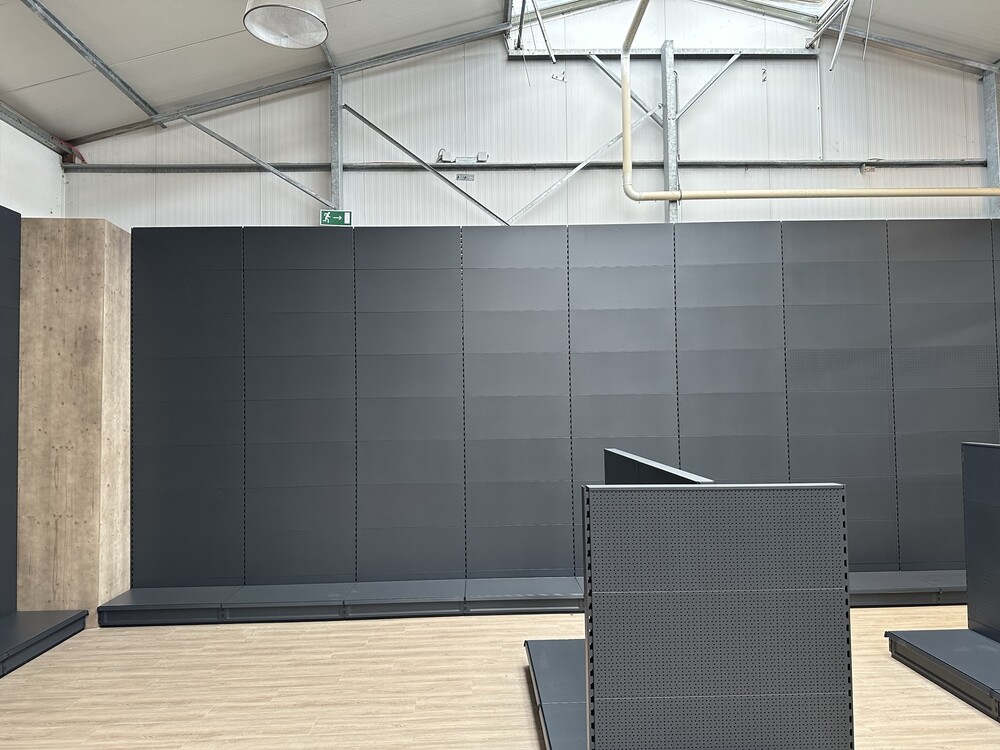
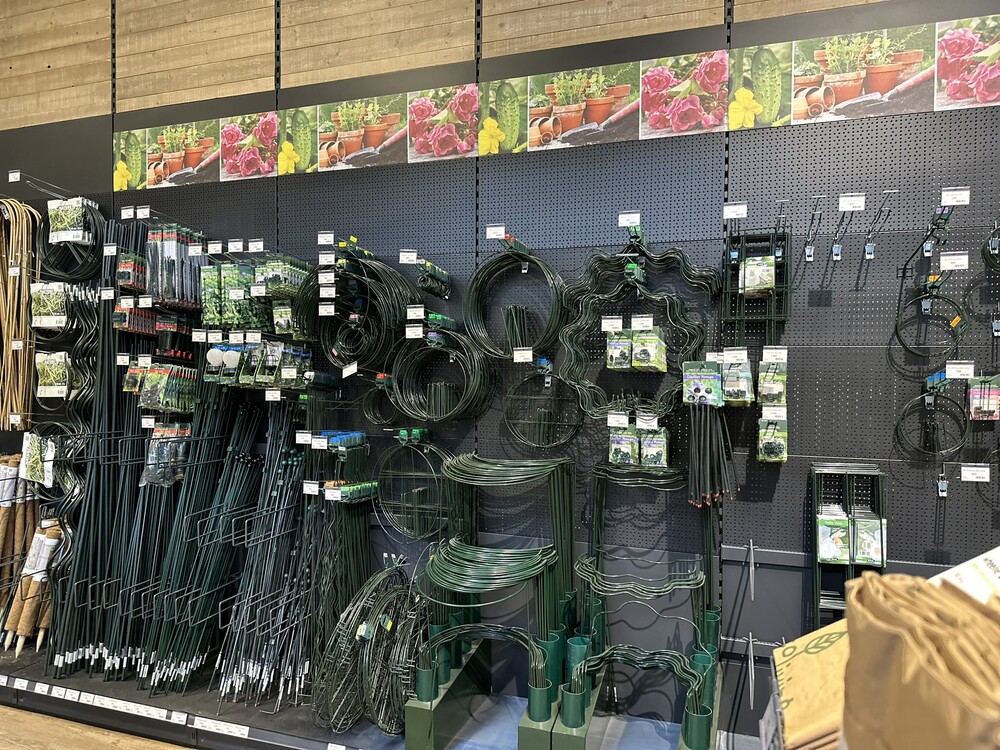
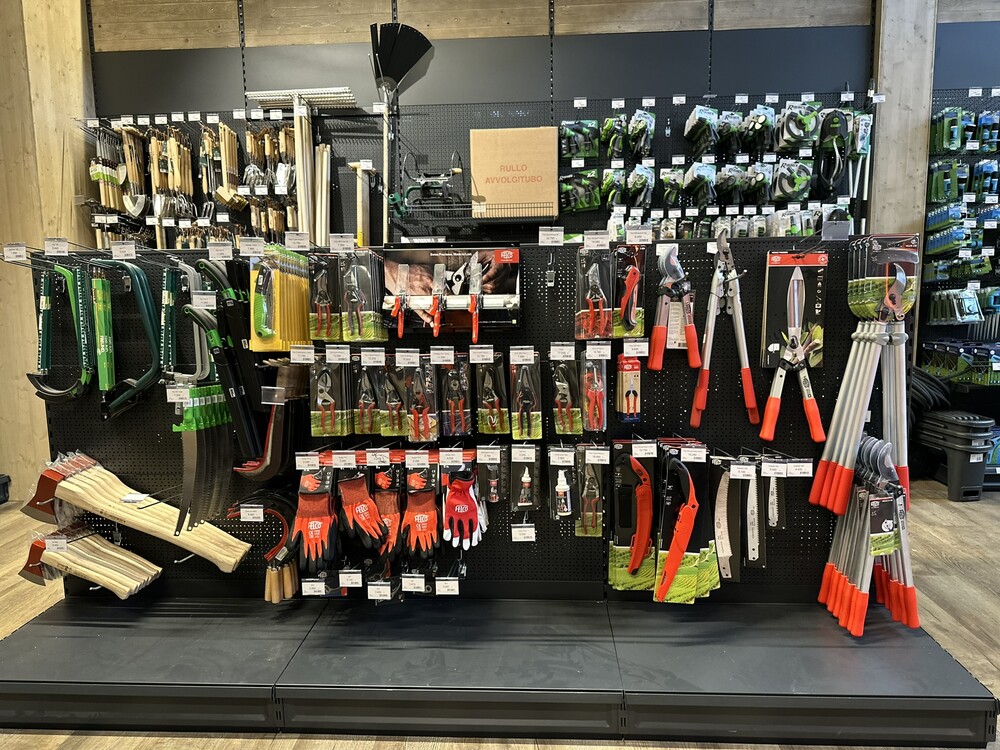
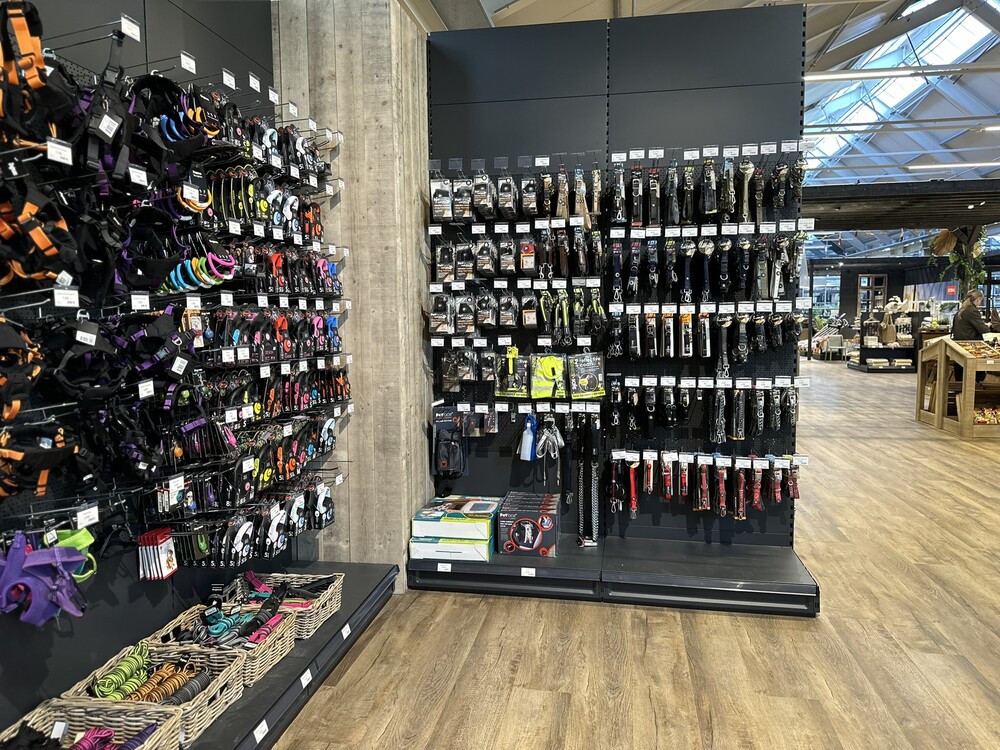
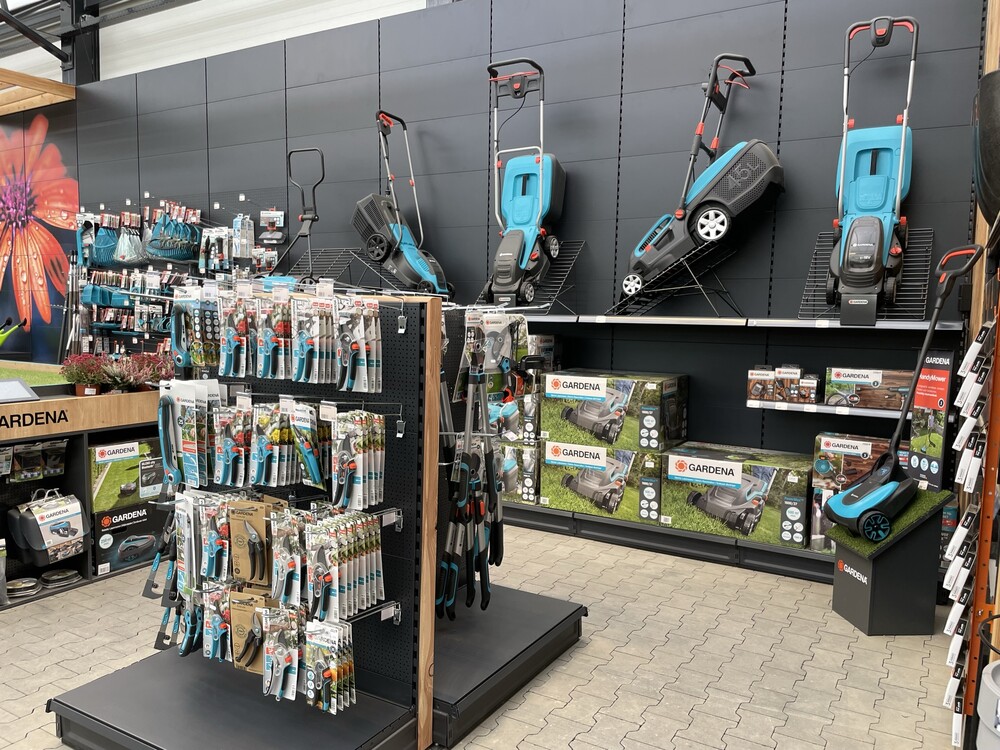
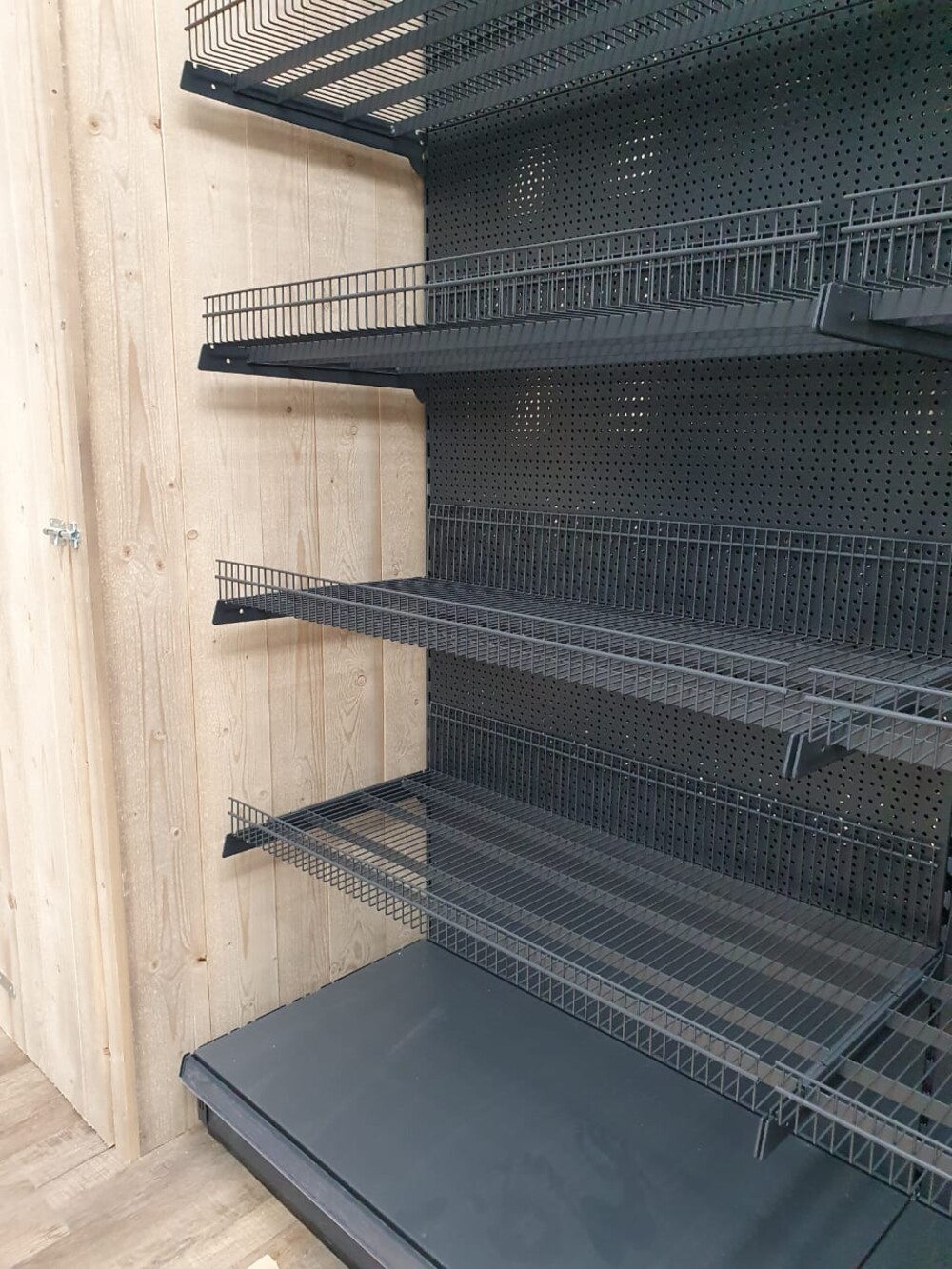
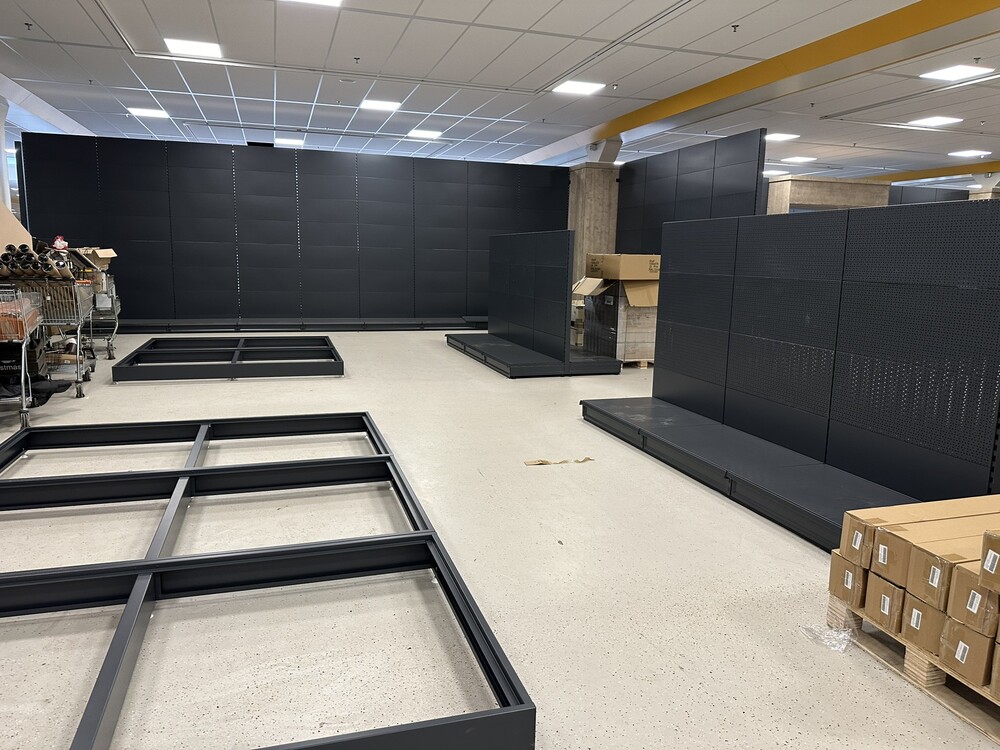
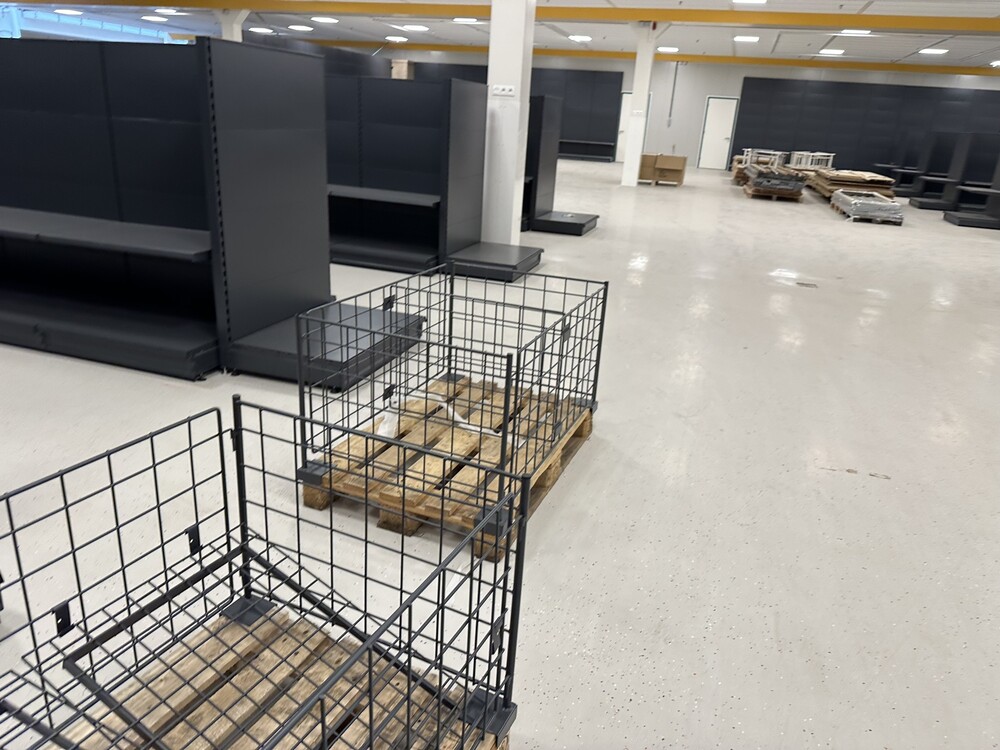
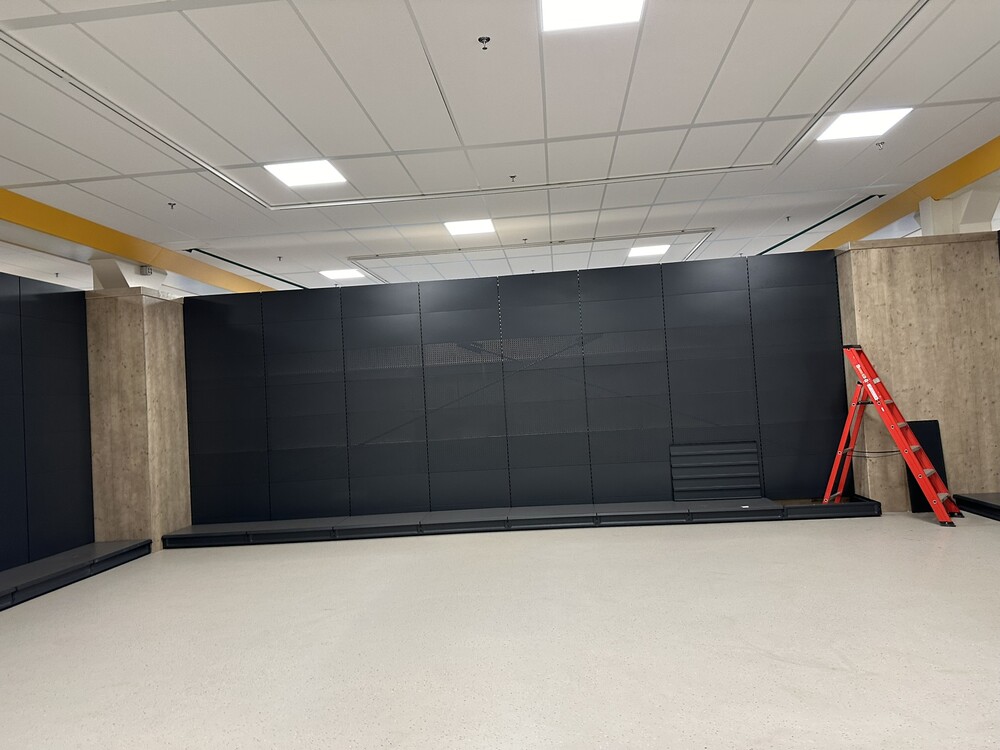
Tegometal has become the generic term for wall shelving from 2.5 to 3.6 metres. The most common presentation height is 3.6 metres. Back panels are interchangeable: smooth or perforated. A perforated panel lets you fit bars for hanging goods — a small decision up front that buys you a lot of presentation freedom later. Several suppliers carry this type, either as own brand or imported from the Far East. Quality differences are real and rarely visible in the quotation.
Buying tip: check the RAL colour and the stock position. Shelving is available in almost any RAL colour, but not every supplier holds every colour in stock. You only discover this two years later when you want to reorder. Ask before signing which colours ship from stock — not which ones are available to order.
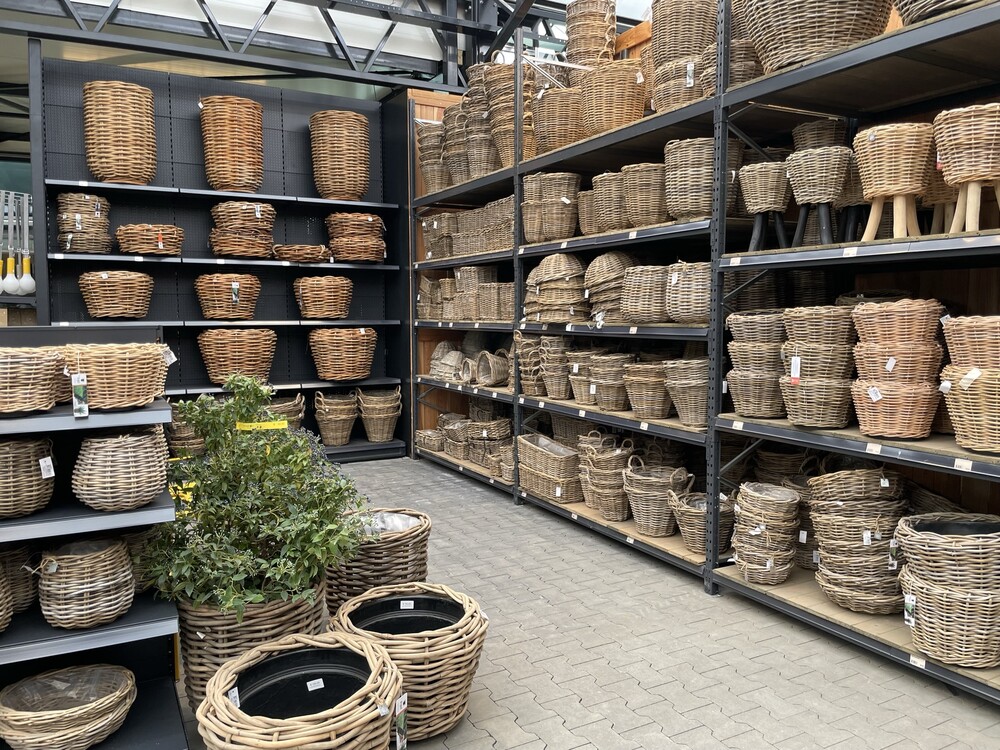
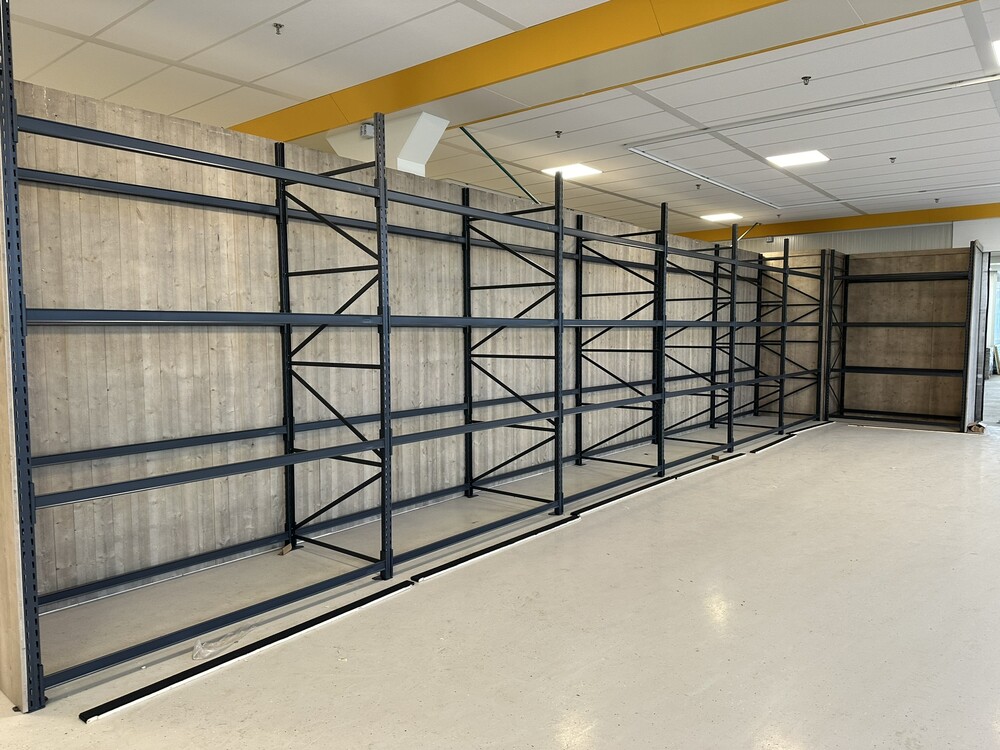
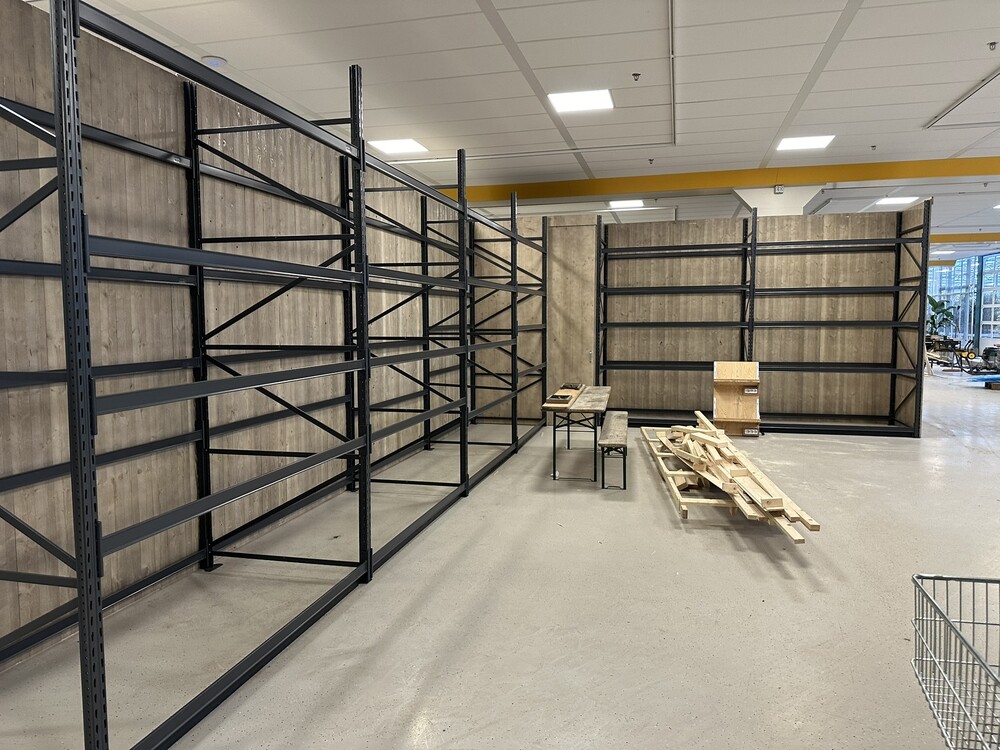
Heavy duty (Schwerlast) shelving
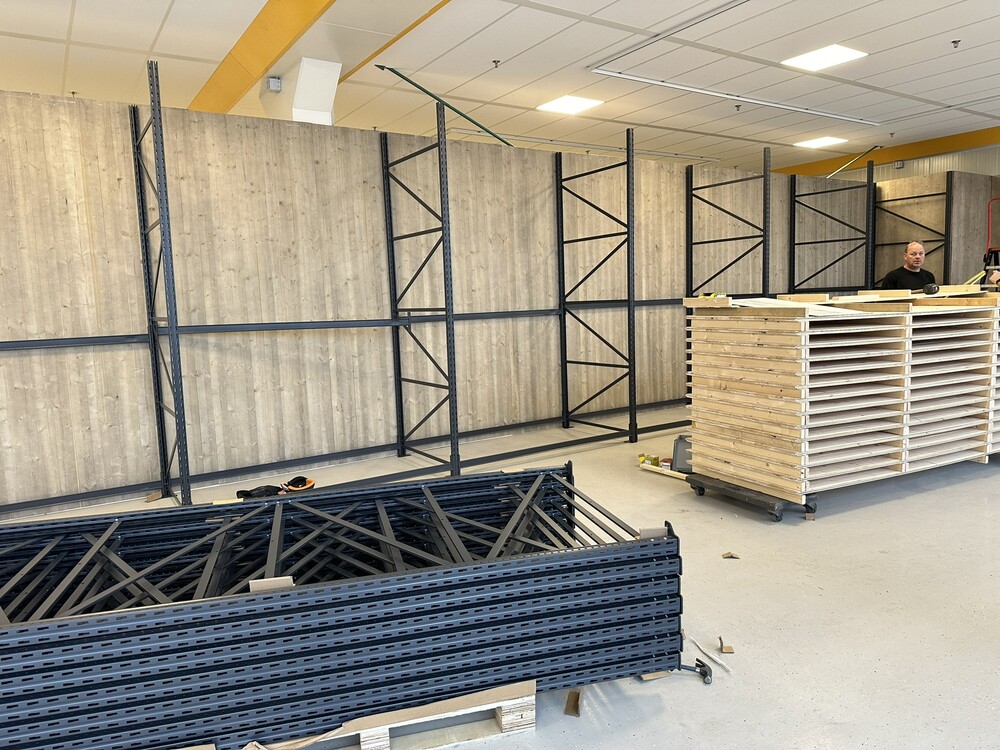
Built for heavier goods: large pots, parasols, bulk items. It combines load capacity with presentation, making it ideal wherever stock and selling happen in the same place.
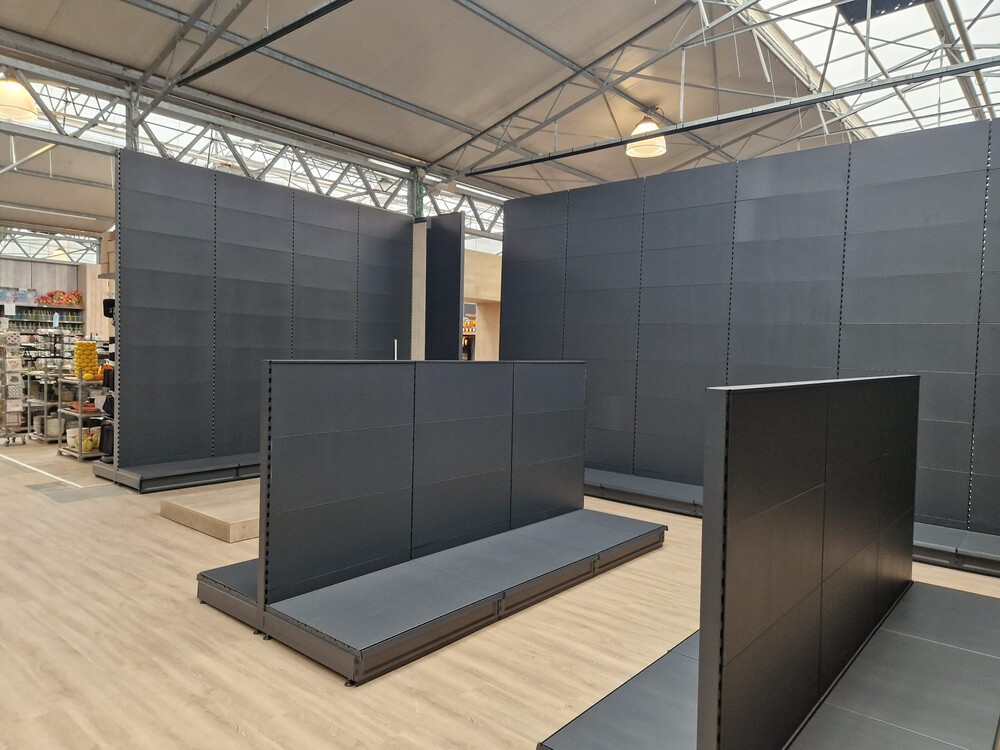
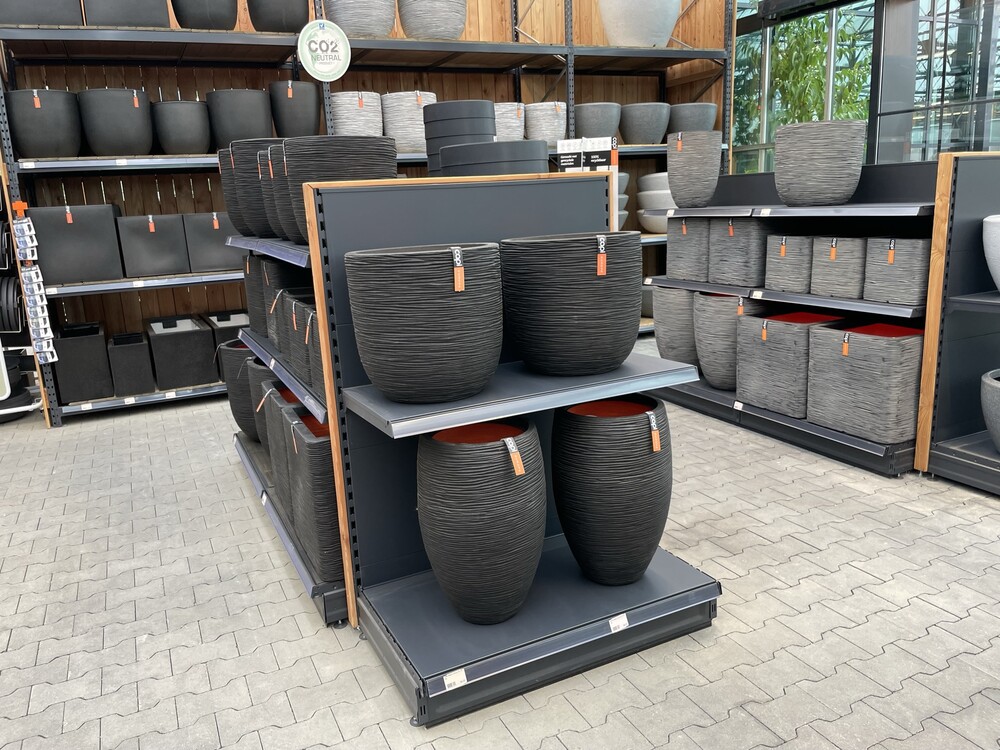
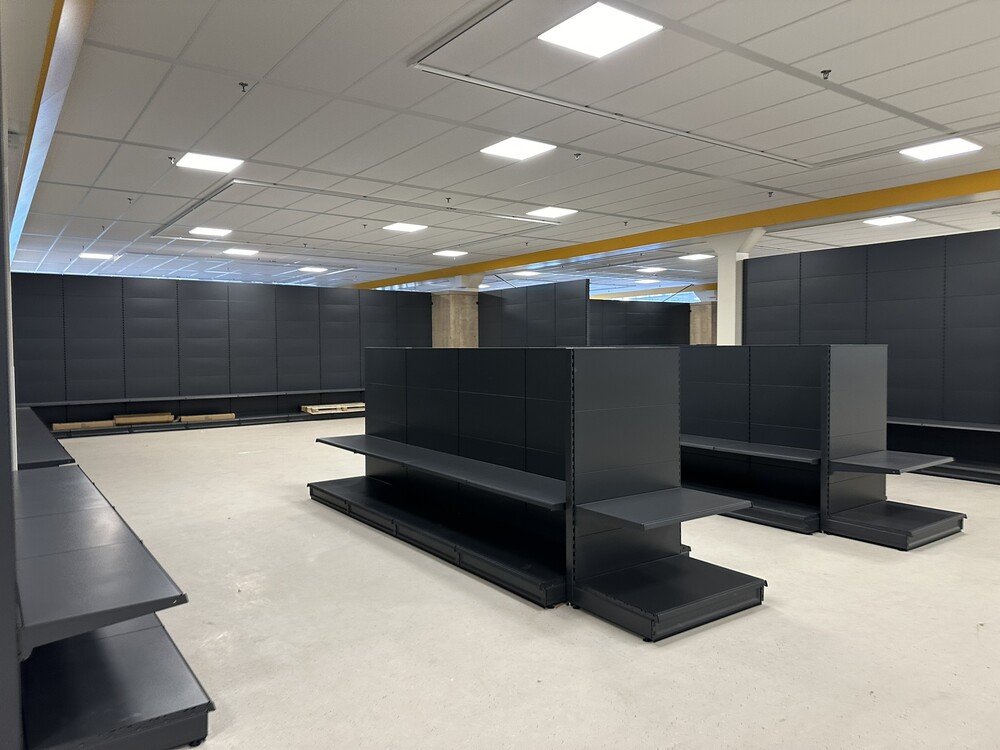
Gondola shelving
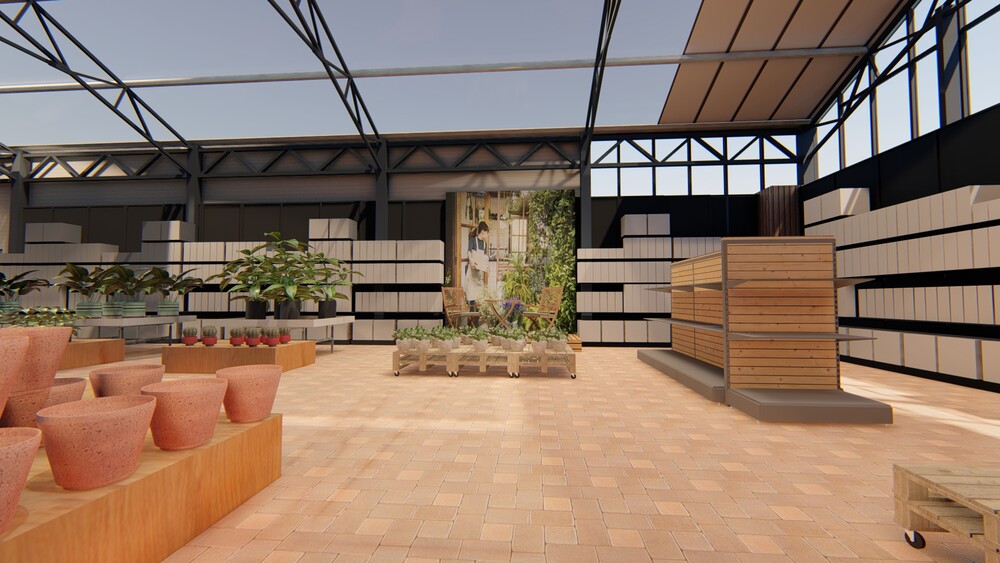
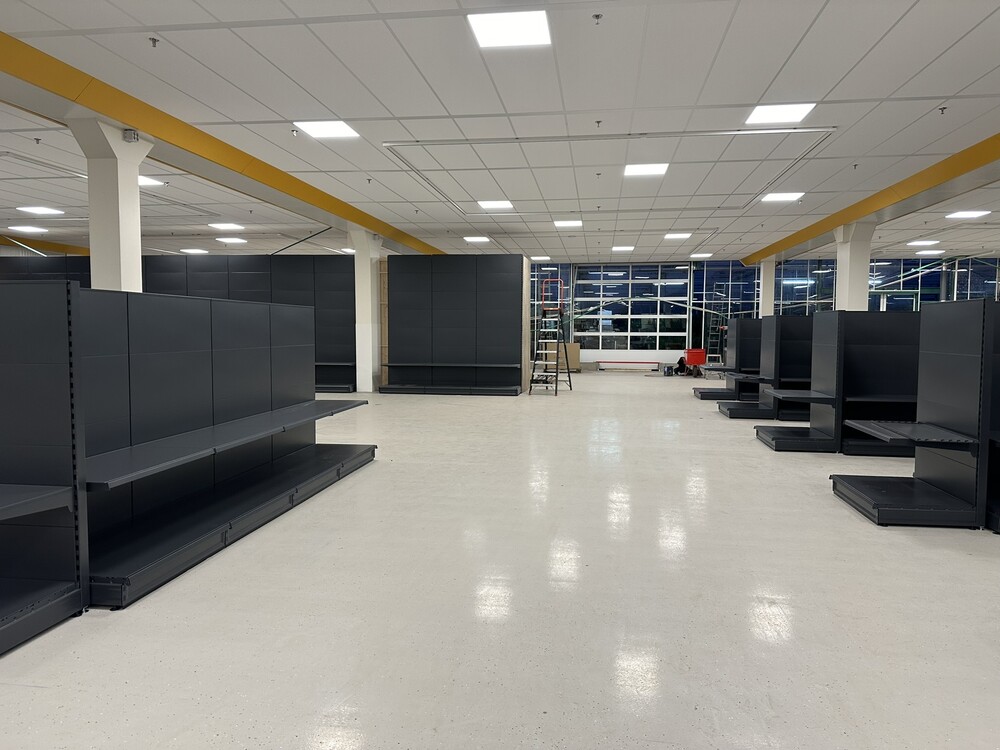
Low units of 150 to 160 cm. Because the back panels adapt to the product, the layout stays highly flexible. Arranged as a cross or back-to-back, gondolas deliver a compact presentation while preserving sightlines and circulation.
Plant benches
There are as many bench suppliers as shelving suppliers. Benches originate in commercial glasshouse growing: heavy and crude. Bench surrounds soften them and create room to communicate varieties or roll out full concept displays. Alongside aluminium, wooden benches with a plastic insert tray are widely used. Your choice comes down to four factors: efficiency in filling and rotating, durability in wet conditions, appearance against your store concept, and payback per linear metre.
Display decks
Usually stainless steel edging with timber platforms, sized to location and height. Often placed against a plant bench as an end display. Various timbers and finishes are used, but the strength of a deck is that it lets the product speak — restraint in the finish pays off. Old cable drums once filled the same role, and round pyramids were used to build height: a three-metre base, 1.5 metres above it, a 50 cm top. The problem with large round displays is that the centre is hard to reach. It is no accident that a billboard often stands there. That blocks the view further down the route — which you can use deliberately: it creates tension in the circulation and lets you build distinct departments and moods.
Pallet displays
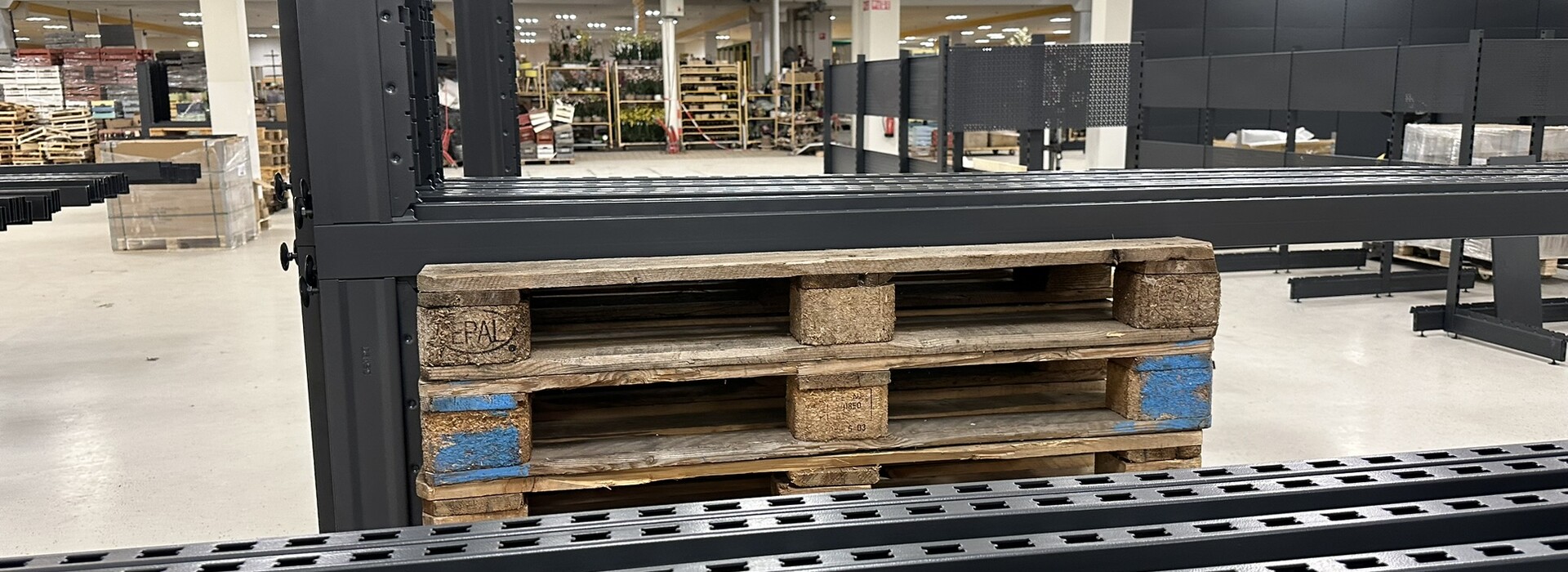
The plain Euro pallet is circular and effective. Reused pallets look natural, move easily, and stacked three high they reach full display height at a fraction of the cost of standard decks. Stood upright and planted with trailing plants, they add atmosphere.
Service counter
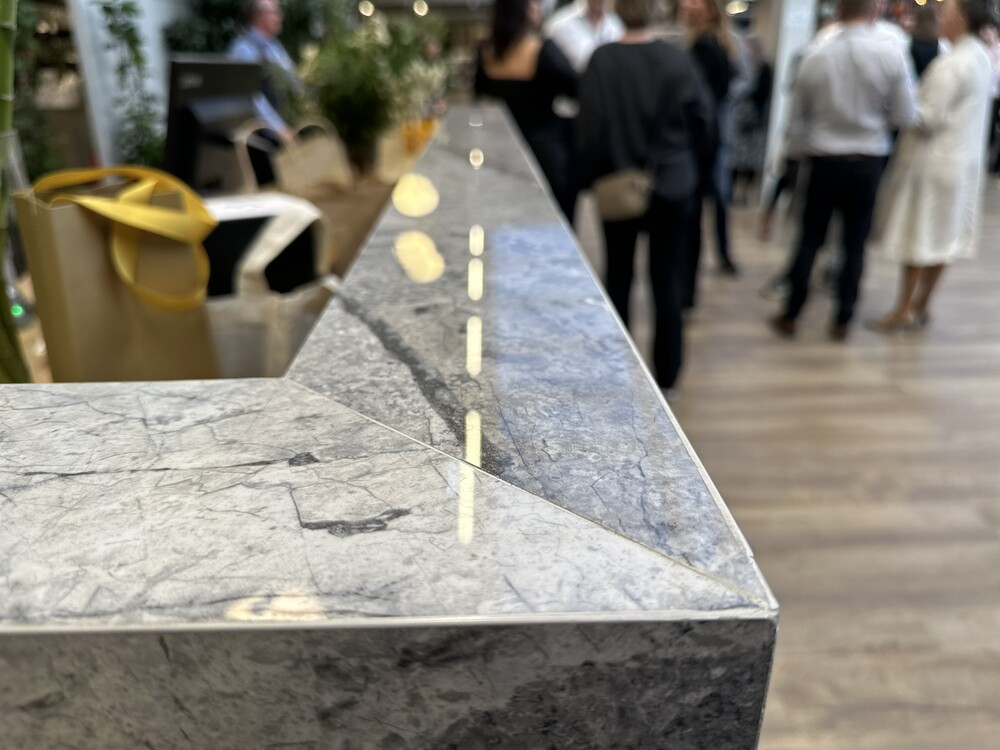
Standard counters exist, but most retailers choose bespoke timber with room to pot up planters for customers. Clean MDF reads modern; ceramic tiles on a base panel give either a rural or a contemporary feel. Cladding a standard counter turns the service point into an eye-catcher that reinforces the route.
Price communication
Good price communication prevents customer questions, reduces shrinkage and lifts margin. Offering the same product from different brands lets you apply price segmentation:
| Tier | Positioning | Margin | Effect |
|---|---|---|---|
| B brand | Very cheap, not the worst quality | Low | Entry point; the customer knows it is finite |
| Private label | Strong price-quality ratio | High | The volume winner — provided quality delivers |
| A brand | Expensive, renowned, professional | Lower % | Lower rotation, good absolute value, brand credibility |
The third tier makes the middle one look better. Every visitor finds a product that fits.
What drives the price?
Shelving height and load class, RAL colour and stock status, back panel type, shelves per metre, self-installation versus contracted assembly, and lead time. We break this down per linear metre so you can compare supplier quotations on a like-for-like basis.
How we work
- Survey and advice — analysis of space, target customer and assortment.
- Design and planning — layout plan, in 3D if required.
- Supplier selection — we know the market, the quality differences and the terms.
- Delivery and installation — assembly to a tight schedule.
- Aftercare — extension and maintenance as your store evolves.
Request a no-obligation quotation →
Frequently asked questions
What does garden centre shop fitting cost? Pricing is per linear metre and depends on height, load class, colour and installation. We compare quotations on equal terms. What shelving height is standard? 3.6 metres is the most common presentation height; 2.5 to 3.6 metres is the normal range. Can I reorder in the same colour later? Only if your supplier stocks that RAL colour. Verify this before you buy. Do you supply the materials yourself? We advise independently, select the supplier that fits your concept and budget, and manage delivery and installation.
 podcast on
  Spotify